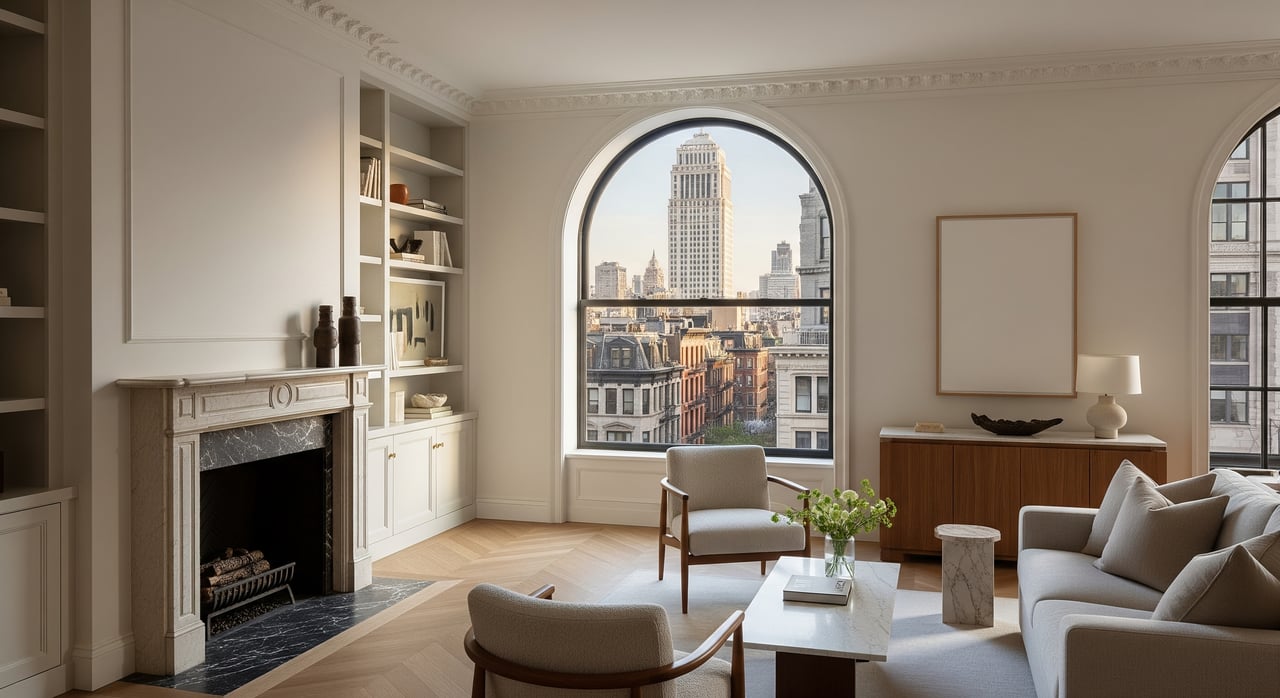
Trying to choose between prewar charm, dramatic loft living, or a slick new tower in Flatiron can feel like comparing apples to three different kinds of oranges. You want the right mix of space, style, and monthly costs without overpaying for things you will not use. In this guide, you will see how the main condo types in the Gramercy–Flatiron corridor stack up on price bands, fees, and day-to-day living so you can buy with clarity. Let’s dive in.
Flatiron condo types at a glance
Prewar conversions
Prewar conversions are older buildings updated for today. You will often see plaster moldings, wood floors, formal room layouts, and ceiling heights that are higher than newer midrise stock but lower than lofts. Kitchens and baths tend to be smaller unless recently renovated.
In Flatiron and Gramercy, these buildings are mid-rise, often 4 to 12 stories, on side streets. The appeal is character and a classic apartment feel. The tradeoffs include limited amenities, older mechanicals, and smaller storage. Renovations can trigger permits and building approvals.
Loft condos
Loft condos are converted from commercial buildings or built in a loft style. Expect high ceilings (often 10 feet or more), big windows, and open floor plans with few interior walls. Some have mezzanines and can span large floor plates that translate into expansive two to four bedroom layouts.
You will find notable lofts in Flatiron and adjacent NoMad corridors. The experience is flexible and dramatic, with great light and volume. Considerations include heating and cooling performance, sound transmission, and bedroom placement due to window rules. Elevator systems in older conversions can vary.
Newer amenity towers
Newer “tech towers” are purpose-built condos with modern layouts and services. Typical features include 24-hour staff, fitness centers, roof decks, playrooms, package rooms, in-unit laundry, centralized HVAC, and private storage options. Glass facades and floor-to-ceiling windows are common.
These towers rise 15 stories or more along primary avenues and near transit. They deliver turnkey living and robust amenities. Expect higher purchase prices and higher common charges. Some buyers prefer more character than these buildings offer.
Price bands and value drivers
Typical price ranges
Prices vary by unit size, floor, condition, and views, but these broad ranges help frame expectations in Flatiron and Gramercy.
- Prewar conversions, entry-level studios and small 1BRs: often the most attainable. Recent observations show low hundreds of thousands up to about $700k to $900k for larger or renovated 1BRs.
- Prewar 1–2BR, mid-range: roughly $700k to $1.6M depending on size and level of renovation.
- Loft condos (2–3BR+): commonly start around $1.5M and can run to $4M or more, with larger or top-floor lofts selling higher.
- Newer amenity towers: studios and 1BRs typically start in the high six figures to $1M+; 2–3BR units often range from about $1.5M to well above $4M based on floor, size, views, and amenity package.
- Penthouses and unique homes: full-floor penthouses and multi-level residences can reach $3M to $10M+ in either rare prewar penthouses or high-end towers.
These ranges are directional, not promises. Use recent closed comps for the exact building and line when you are ready to submit an offer.
Price per square foot
- Amenity towers usually command the highest price per square foot because buyers pay for new systems, services, and views.
- Lofts can have slightly lower price per square foot if the layout is unconventional, though their large size often means a high overall price.
- Prewar conversions vary widely. Renovated designer units can command premiums, while unrenovated apartments trade at lower per-square-foot levels.
Key factors that move price
- Renovation and finishes.
- Floor height, exposures, and views (for example, south light around the Madison–23rd Street corridor).
- Outdoor space such as terraces or roof rights.
- Amenity level and storage.
- Building financials and resale history.
Monthly fees and ownership
Condo vs. co-op basics
In Flatiron, you will see both condos and co-ops, including many classic prewar buildings that are co-ops and a significant number of post-2000 condos. Condos give you title to a unit plus an interest in the common elements. Co-ops sell you shares in a corporation and a proprietary lease.
For a deeper explainer on structures, approvals, and documents, see the New York State Attorney General’s Real Estate Finance Bureau overview of co-ops and condos. The bureau’s resources help you understand offering plans, bylaws, and governance. You can start with the New York State Attorney General’s Real Estate Finance Bureau.
What fees cover
Condo common charges typically fund building operations: staff, insurance, common-area utilities, elevator service, cleaning, amenity upkeep, and reserve contributions. Co-op maintenance usually covers operating costs and also includes the building’s property taxes and any underlying mortgage payments.
Because these structures differ, fees are not apples-to-apples between condos and co-ops. For a plain-English comparison, see Brick Underground’s overview of the difference between common charges and co-op maintenance.
Typical fee ranges
Smaller units in modest buildings can carry fees in the low hundreds per month. Larger residences in full-service towers often sit in the low thousands per month. Co-op maintenance for similar square footage may be higher since taxes and mortgage service can be included. Focus on total monthly carrying cost: mortgage payment plus common charges or maintenance plus property taxes.
Reserves and assessments
Older prewar and loft conversions may have smaller reserves, so major projects can lead to special assessments. Newer towers often launch with healthy reserves set by sponsors, but large amenities can increase operating costs over time. Always request the last two years of budgets, any reserve study, upcoming assessments, and a summary of recent capital work.
Financing and approvals
Condos are generally more straightforward to finance, with fewer board approvals for purchase and future subletting policies that are usually more flexible (building rules still apply). Co-ops can require larger down payments and board approval. Short-term rentals are widely restricted across Manhattan. Confirm rules in writing.
Lifestyle tradeoffs to consider
Character vs. convenience
- Prewar conversions offer period details and a classic layout. You may trade off in-building amenities and modern HVAC.
- Lofts deliver big volume and flexible planning. Consider HVAC upgrades and soundproofing if needed.
- Amenity towers prioritize convenience and services. Expect higher fees and a more contemporary aesthetic.
Noise and privacy
Prewar and loft buildings can have thicker walls but widely varying sound profiles due to age and layout. Towers concentrate more units per core and have shared amenity spaces. Evaluate line-by-line and visit at different times of day.
Renovation and permitting
Older buildings can require extensive permitting for structural changes. Lofts sometimes allow more reconfiguration depending on building rules and what was preserved in the conversion. Even in newer condos, major plumbing or electrical work requires permits. For process details, review the NYC Department of Buildings guidance on permits and approvals.
Pets, subletting, and short-term stays
Rules vary by building. Many condos are more permissive than co-ops, but restrictions on short-term rentals are common. Always confirm pet policies and any minimum owner-occupancy periods if you plan to rent the unit in the future.
Storage and parking
Prewar and loft units may have limited closets. Newer towers often include better storage solutions and offer private storage for a fee. Dedicated parking is rare in Flatiron, so you will likely use nearby garages if you need a car.
Taxes and carrying costs
Real estate taxes vary by building and unit. Some newer condos may have abatements that reduce taxes for a set period. Compare the full monthly picture: mortgage payment plus fees plus property taxes to understand real affordability.
Buyer checklist for Flatiron condos
Use this quick list while touring and during diligence.
- Building type: Is it prewar, loft, or a newer amenity tower? How do you feel in the space day-to-day?
- Ownership structure: Condo or co-op? If co-op, what are typical down payments and board requirements?
- Monthly costs: What do common charges or maintenance include? Are taxes separate or included? Any short-term assessments?
- Reserves and projects: Review the last two budgets, reserve study (if available), and recent capital projects. Ask about upcoming work.
- Sound, light, and exposure: Visit at multiple times. Check line, floor, and orientation. South-facing windows near Madison Square Park corridors can matter.
- Systems and HVAC: Age and condition of boilers, elevators, and HVAC. For lofts, ask about temperature control and sound management.
- Amenities and staff: Will you actually use the gym, roof deck, or playroom? Services drive fees.
- Renovation scope: If you plan to renovate, confirm building rules and permitting expectations. Ask for alteration agreements and contractor requirements.
- Sublet and rental rules: If long-term flexibility matters, confirm policies and any minimum time-in-residence.
- Resale history: Look at recent comps in the building and line to gauge liquidity.
For broader context on new development and amenity trends around Flatiron and NoMad, browse The Real Deal’s coverage of the Flatiron District. It is a helpful way to see how new towers and conversions change the local supply.
How APT212 helps
You want local guidance and a smooth closing. APT212 is a boutique downtown brokerage built for that exact mix. We combine on-the-ground Manhattan expertise with modern transaction tools that cut friction for domestic and international buyers.
- Buyer representation for condos and co-ops across Gramercy and Flatiron.
- Investor-ready advisory, comps, and value-add strategies for lofts and conversions.
- Crypto-enabled settlement workflows with documented KYC/AML and escrow options for digital-asset buyers.
- Concierge-level coordination with attorneys, lenders, and building management.
If you are weighing prewar character against loft volume or tower convenience, we will build a comparison of total carrying costs, recent comps, and building financials so you can move forward with confidence. Ready to explore listings and next steps? Talk to APT212.
FAQs
What are the main Flatiron condo types?
- Prewar conversions with classic details, open-plan loft condos with high ceilings, and newer amenity towers with modern systems and services.
How do condo fees compare to co-op maintenance?
- Condo common charges fund building operations, while co-op maintenance often also includes the building’s property taxes and any underlying mortgage service.
Are amenity towers always more expensive?
- Amenity towers usually carry higher prices and fees per square foot due to new systems, staff, and services, though exact costs depend on size, floor, views, and condition.
Do lofts have special considerations?
- Yes. Confirm HVAC performance, sound transmission, elevator systems, and whether the layout allows legal bedrooms given window and light requirements.
What paperwork should I review before buying?
- The last two budgets, reserve study if available, offering plan or bylaws, recent meeting minutes, any pending assessments, and building rules on renovations and rentals.
Where can I learn about permits for renovations?
- Review NYC Department of Buildings guidance on permits and approvals and confirm your building’s alteration agreement before planning work.

